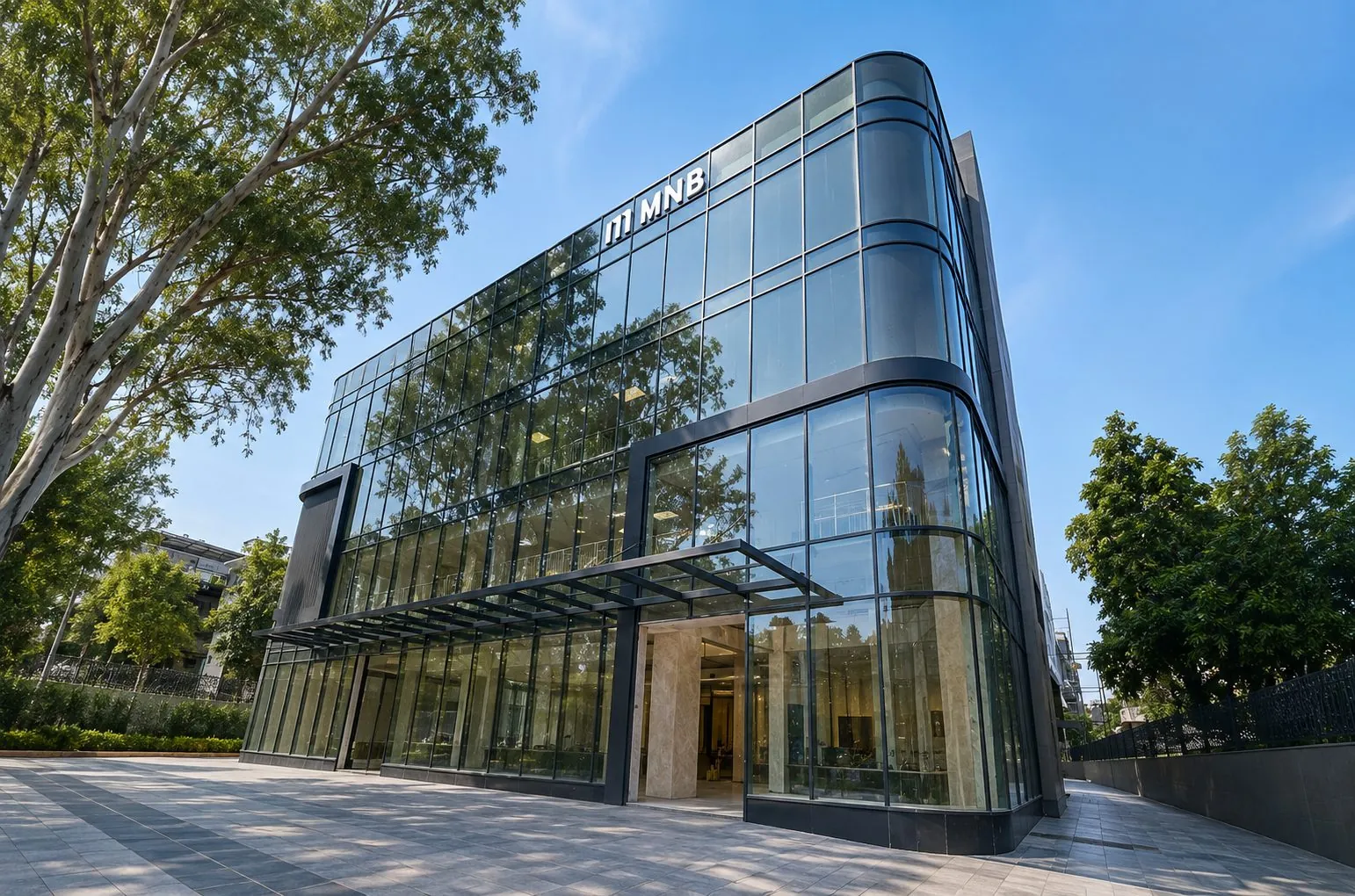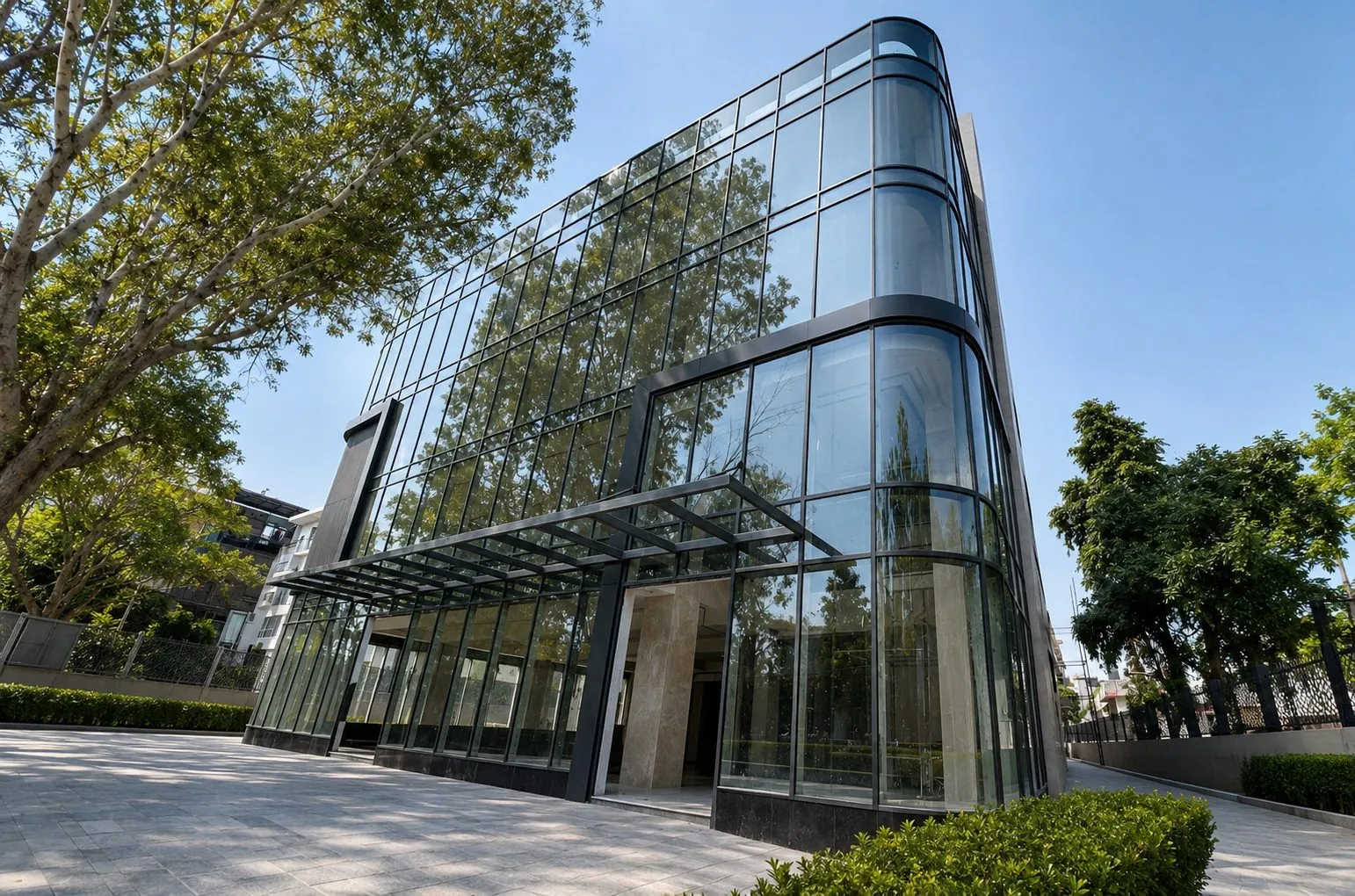
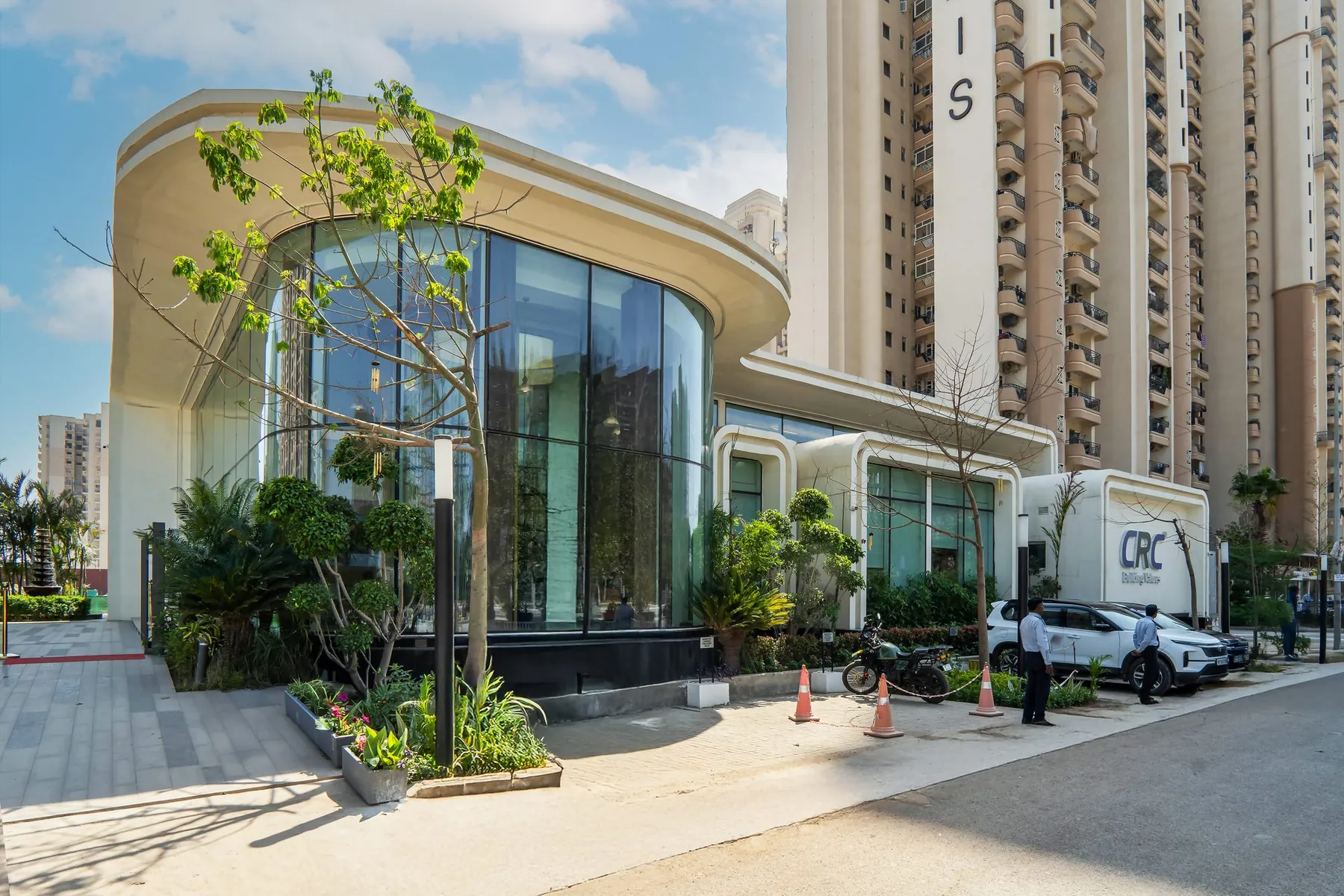
Bending large-format glass
Flat glass naturally wants to remain flat.
To form it into a curve, the glass has to be heated into a controlled forming range where it becomes sufficiently pliable to conform to a mould.
The process must be carefully controlled because variations in:
- Heating
- Temperature distribution
- Forming
- Cooling
- Support
- Mould geometry
can affect the final result. With smaller decorative glass, minor process variations can sometimes be easier to manage. With panels approaching 3 metres in height, the scale makes every stage substantially more demanding.
The glass needs to heat uniformly. It has to settle accurately onto the mould. Its geometry must remain controlled across the entire panel. And once the required form has been achieved, it must cool without introducing unacceptable dimensional change or optical distortion.
The challenge therefore begins before the glass ever reaches the building.
It begins in the furnace.